Bridge or Bottleneck? Why the Mira Bhayandar Flyover “Mismatch” is Going Viral
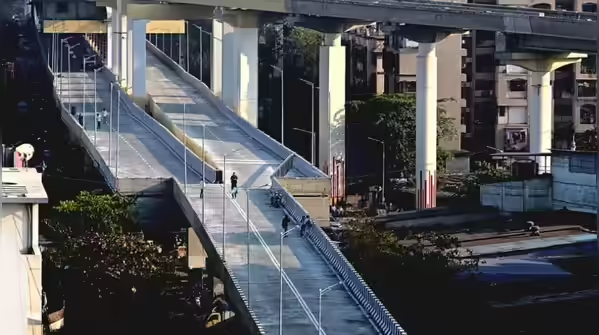
Mira Bhayandar Flyover Controversy: Everything You Need to Know About the 4-Lane to 2-Lane Shift
This image has been making the rounds lately, sparking a mix of confusion, memes, and genuine concern. At first glance, it looks like a glitch in the Matrix—two ramps that seem to be having a very public disagreement about which floor they’re supposed to meet on.
But is the Mira Bhayandar flyover a marvel of future planning or just a massive bottleneck in the making? Let’s dive into why this specific stretch of concrete is turning so many heads.
The “Mismatch” That Went Viral
If you’ve seen the photos, you know the one. There’s a point where the elevation of one arm of the flyover looks significantly higher than the other. To the untrained eye, it looks like an engineering “oops” moment.
The Reality: In most cases like this (similar to the Gokhale Bridge drama in Andheri), these height differences aren’t mistakes. They are usually designed to accommodate:
- Existing Infrastructure: Clearing high-tension wires or existing railway lines.
- Metro Integration: Many of these new flyovers are designed to weave around or under upcoming Metro lines (like Metro Line 9).
- Future Ramp Connections: Sometimes one side is built to a specific height to allow for a future “loop” or a connector that hasn’t been started yet.
Bridge or Bottleneck?
The Mira-Bhayandar region has long been a traffic nightmare. For residents, the flyover is a beacon of hope, but there are two sides to this concrete coin:
🚀 The “Bridge” Perspective
- Commute Transformation: It aims to bypass some of the heaviest bottlenecks on the Western Express Highway (WEH) and the internal Mira Road arteries.
- Direct Connectivity: Once fully operational, it’s meant to shave 20–30 minutes off the crawl toward Mumbai.
- Multi-Modal Planning: It’s a sign of a city finally trying to integrate road and rail (Metro) simultaneously rather than as afterthoughts.
🛑 The “Bottleneck” Perspective
- Construction Fatigue: The “bottleneck” isn’t just the final design; it’s the years of barricades, dust, and diverted traffic that locals are currently enduring.
- The “Funnel” Effect: There is always a fear that a high-speed flyover will simply dump a massive volume of cars into a narrow residential street at the exit, moving the traffic jam 2km down the road rather than solving it.
Why It Matters Now
Mira Bhayandar is no longer just a “satellite town”; it’s a massive residential hub. The infrastructure is playing catch-up with a population that has exploded over the last decade.
Pro Tip: If you’re driving through this area during peak hours, keep an eye on local traffic apps. The construction zones change frequently as they launch new girders.
The Verdict
The Mira Bhayandar flyover is a classic example of “short-term pain for long-term gain.” While the visual of the misaligned ramps makes for a great “You had one job” meme, the engineering logic usually holds up once the final layers of asphalt are poured and the connectors are joined.
It’s a bridge to a faster commute, but until the last ribbon is cut, it remains the region’s biggest bottleneck.
What do you think? Is this the solution Mira Road needs, or are we just building a highway to the next traffic jam? Would you like me to look up the latest official completion date or the specific technical reasons for that height difference?