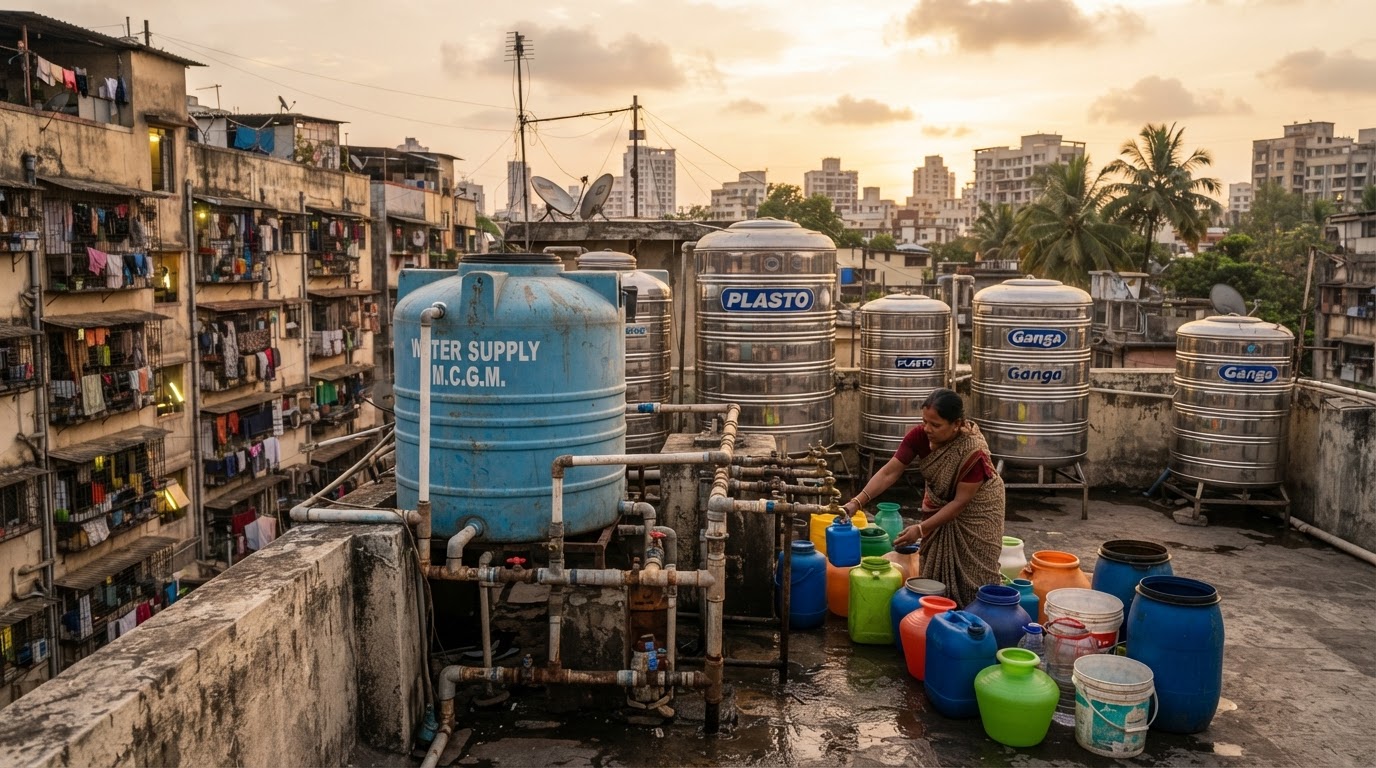
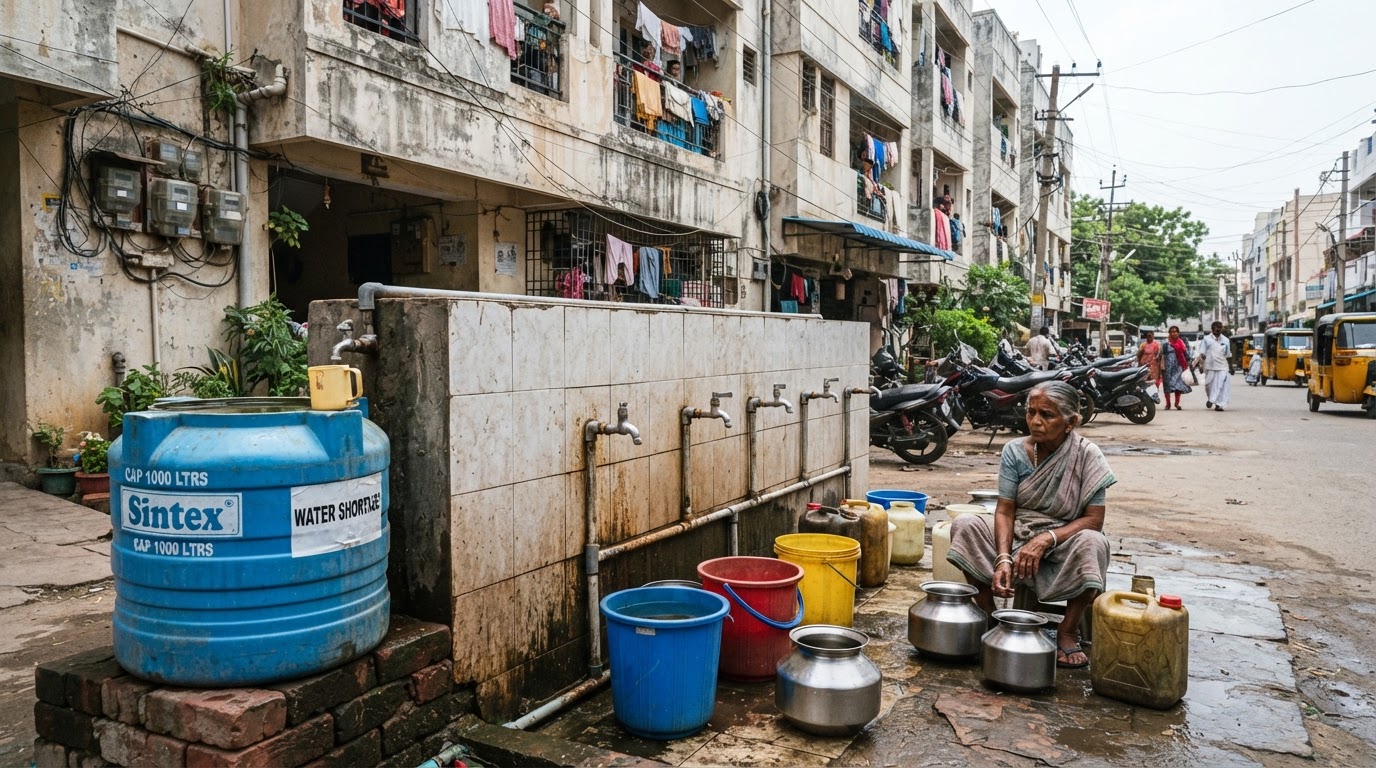
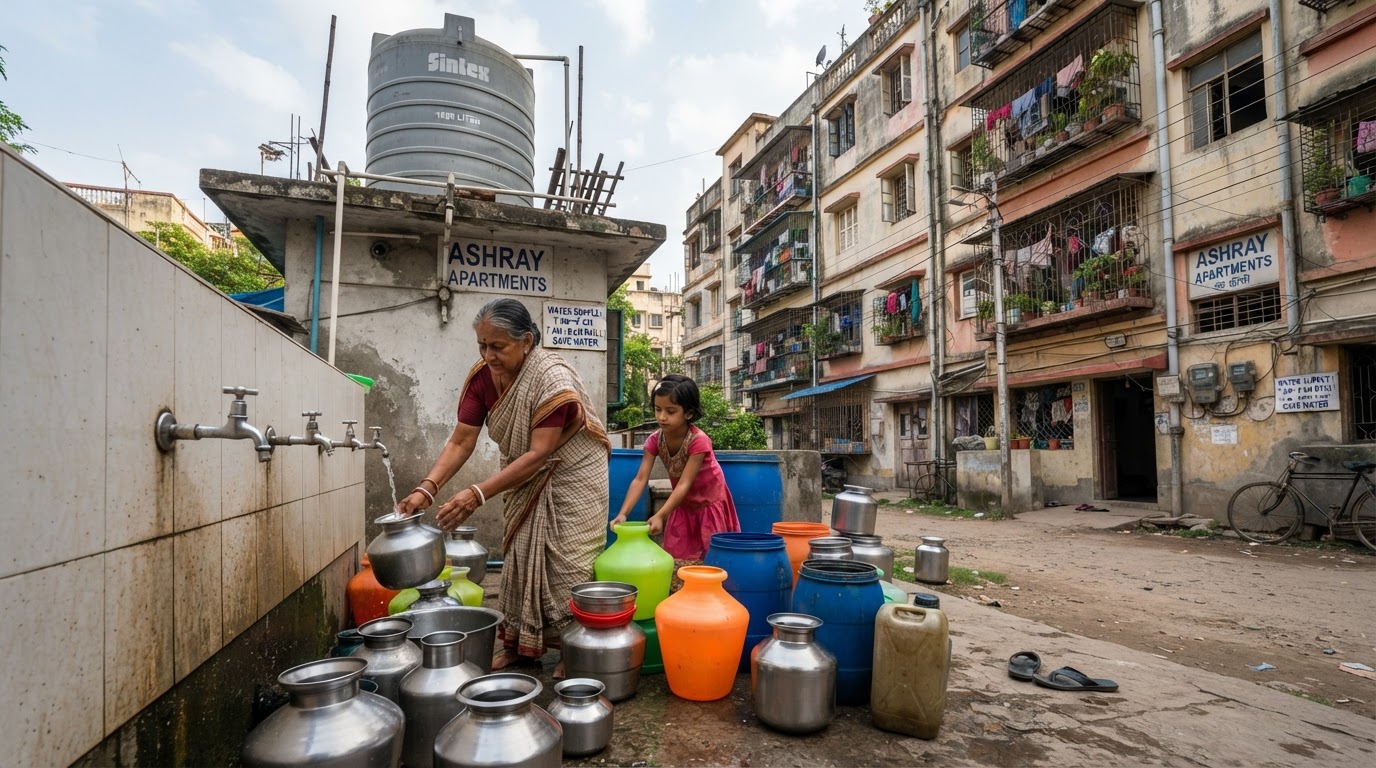
Mira-Bhayandar Water Crisis: Residents Face 50-Hour Disruption and Muddy Water
Mira-Bhayandar residents reportedly faced nearly 50 hours without water after an MIDC pipeline leak. Supply resumed, but muddy water complaints surfaced in several areas.
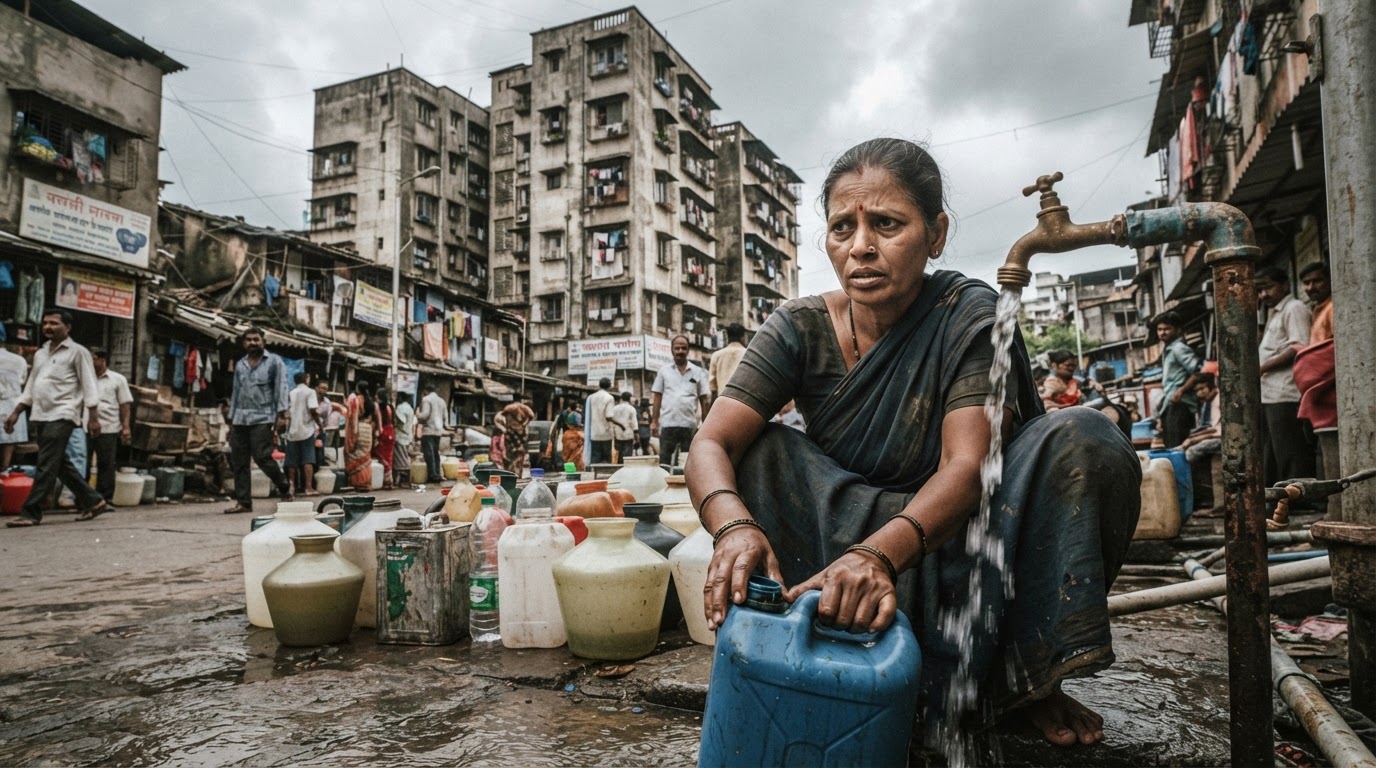
Residents across parts of Mira-Bhayandar faced another difficult weekend as water supply was disrupted following a major leakage in an MIDC water pipeline. After reportedly waiting nearly 50 hours for supply to return, some residents were still dealing with a new problem—muddy water flowing from their taps.
The disruption came at a particularly difficult time for the city, which is already operating under scheduled water cuts. With the municipal corporation implementing restrictions to conserve available water reserves, an unexpected pipeline failure has further exposed how vulnerable households can be when supply interruptions occur outside the planned schedule.
The incident has raised important questions about pipeline infrastructure, emergency repairs, water quality after restoration and how residents should respond when their taps remain dry or the water appears contaminated.
What happened in Mira-Bhayandar over the weekend?
According to reports published on November 22 and November 23, water supply to several parts of Mira-Bhayandar was disrupted after a leakage developed in a major MIDC water pipeline.
The reported damage occurred near Kalyan-Katai Naka while work was being carried out to install a pipeline for a gas utility. The MIDC water pipeline was reportedly damaged during the work, resulting in a substantial leakage and interruption of supply.
Water supply to the city was affected while repairs were undertaken. Residents in several areas reportedly experienced prolonged disruption, with some waiting approximately 50 hours before water began returning.
However, the restoration did not immediately resolve all the concerns. Reports on November 23 described muddy water reaching residents in areas including Indralok, Kashigaon and Navghar.
For residents who had already spent nearly two days managing without regular water, the appearance of muddy water created another concern: whether the restored supply was suitable for everyday use. The problem was no longer simply the absence of water. It was also the condition of the water returning to households.
Why did the water supply stop?
Mira-Bhayandar receives water through supply arrangements involving STEM and the Maharashtra Industrial Development Corporation, commonly known as MIDC.
The reported weekend disruption followed a scheduled MIDC shutdown. Once the planned interruption ended and supply was being restored, the pipeline reportedly suffered damage during gas-pipeline installation work near Kalyan-Katai Naka. The leakage required repairs, which led to another interruption.
This meant residents were affected by a combination of factors:
- Scheduled water-supply restrictions already in force.
- An unexpected pipeline leakage.
- Repair work that interrupted supply further.
- Delayed restoration to affected localities.
- Reports of muddy water after supply resumed.
When planned shutdowns and unexpected infrastructure failures overlap, residents can experience substantially longer periods without water than they anticipated.
Why Mira-Bhayandar is already facing scheduled water cuts
The city is currently under a 10% water-reduction measure announced by the municipal corporation. MBMC has said the reduction is intended to help manage available water reserves and plan supplies through August 31, 2027.
The municipal corporation's November 13 press release revised the weekly shutdown schedule. The earlier STEM shutdown on Wednesdays was cancelled and replaced with a Monday shutdown.
STEM supply: suspended every Monday from 9 AM to Tuesday at 9 AM — a total of 24 hours. MIDC supply: suspended every Thursday midnight to Saturday noon — a total of 36 hours.
These are the scheduled weekly interruptions announced by MBMC. Actual restoration to individual buildings may vary depending on distribution arrangements, local storage and operational conditions. Residents should follow the latest municipal notice rather than older water-cut schedules circulated on WhatsApp or social media.
The revised MBMC water-cut schedule explained
The new schedule is particularly important because older reports published in October described different shutdown timings.
STEM water supply
The previously scheduled Wednesday shutdown has been cancelled. The revised schedule states that STEM water supply to Mira-Bhayandar will be suspended every Monday from 9 AM until Tuesday at 9 AM, a total of 24 hours.
MIDC water supply
The MIDC shutdown remains scheduled from Thursday midnight until Saturday noon, amounting to 36 hours. This means households need to plan around two different water-supply sources and two separate shutdown periods.
Residents should not assume that water will return immediately at the exact time a shutdown ends. MBMC has stated that supply may resume at lower pressure and with delays following scheduled shutdowns.
Which areas reportedly received muddy water?
Reports published on November 23 specifically mentioned residents in Indralok, Kashigaon and Navghar experiencing muddy water after supply resumed. The reports indicate that water was restored after an extended disruption, but some residents were dissatisfied with the quality of the supply.
It is important to distinguish between reported affected areas and a complete official list of affected localities. The available reports do not establish that every building in these areas received muddy water, nor that all Mira-Bhayandar localities were affected equally. Residents experiencing unusual colour, sediment or an abnormal smell should report the issue through the appropriate municipal water-supply channel.
Is muddy water safe to drink?
Residents should not assume that water is safe for drinking simply because municipal supply has resumed. If water appears visibly muddy, discoloured or unusual, avoid using it for drinking, cooking, brushing teeth or preparing food until its safety has been established.
Boiling water can help address certain microbial risks, but it does not remove all possible contaminants, including some chemical contaminants or suspended material. If the water remains visibly dirty, boiling alone should not be treated as a guarantee of safety.
Residents should:
- Avoid drinking visibly muddy water.
- Use a safe alternative drinking-water source while the problem persists.
- Avoid preparing food or beverages using questionable water.
- Contact the municipal water-supply department to report the condition.
- Follow any official advisory regarding water quality.
- Resume normal use only when the water is clear and any applicable official guidance has been followed.
If multiple residents in the same building are experiencing the same issue, the housing society can submit a collective complaint identifying the location, time and nature of the problem.
What should housing societies do during an extended water cut?
Housing societies in Mira Road and Bhayandar should prepare for both scheduled shutdowns and unexpected disruptions.
1. Monitor tank levels
Society management should check overhead and underground storage levels before scheduled interruptions begin.
2. Communicate with residents
Inform residents when a planned shutdown is expected and share updates if supply has not returned as anticipated.
3. Avoid unnecessary water use
During periods of restricted supply, prioritise essential household use and avoid wasteful activities.
4. Inspect water after restoration
If supply returns after a prolonged interruption, societies should pay attention to unusual colour, sediment or smell.
5. Report problems collectively
A collective complaint with the exact building location, time of disruption and details of the water condition can help the municipal authority identify the problem.
6. Keep emergency arrangements ready
Societies may need to plan alternative arrangements for essential water use during prolonged disruptions, while ensuring any tanker water is sourced responsibly and its suitability for intended use is established.
Why unexpected pipeline damage is a bigger concern
The recent incident also raises a broader infrastructure question. Cities increasingly require underground utilities such as water pipelines, gas pipelines, cables and drainage systems to coexist in crowded urban areas. When one utility is installed or repaired, accurate identification of existing underground infrastructure is critical.
The reported damage near Kalyan-Katai Naka during gas-pipeline installation highlights the importance of coordination between agencies and contractors working in the same area. The incident alone does not establish negligence or responsibility. Those questions require an official investigation and verified records.
However, it does highlight the importance of:
- Accurate underground utility mapping.
- Coordination before excavation.
- Appropriate precautions during digging.
- Clear emergency repair procedures.
- Timely communication with affected residents.
- Transparent updates about restoration.
When a major water pipeline is damaged, the consequences can extend beyond the immediate worksite and affect residential buildings across multiple neighbourhoods.
How long will Mira-Bhayandar continue facing water cuts?
MBMC's current 10% reduction is intended to manage available water reserves through August 31, 2027, according to its announcements. The weekly scheduled shutdowns are part of this water-management arrangement.
Residents should understand that scheduled water cuts and unexpected pipeline failures are separate issues. The planned restrictions may continue according to municipal policy, while the duration and location of any additional interruption will depend on future operational problems, maintenance work or official decisions. Any change to the water-cut schedule should be verified through the latest MBMC announcement.
What residents should do if water has not returned
If your building continues to receive no water after the expected restoration period:
- Confirm whether neighbouring buildings are experiencing the same problem.
- Check your society's internal storage and distribution system.
- Contact the relevant municipal water-supply department.
- Record the time and duration of the interruption.
- Submit a complaint with the exact locality and building details.
- Keep the complaint reference for follow-up.
If water has returned but is muddy, report that separately. A supply-restoration complaint and a water-quality complaint may require different responses.
The bigger question: Can Mira-Bhayandar prevent the next water disruption?
The weekend incident demonstrates how quickly an unexpected infrastructure problem can compound an already difficult water-supply situation. Scheduled shutdowns can be planned for. Residents can store water, societies can manage tanks and households can adjust their routines. Unexpected pipeline failures are different.
When a major supply line is damaged, residents may have little warning and may not know when water will return. Even after restoration, questions about water quality can delay normal use.
Mira-Bhayandar's water challenge is therefore not only about how much water the city receives. It is also about how reliably that water reaches homes, how infrastructure is protected during construction and how quickly residents receive accurate information during emergencies.
For residents, the immediate priority is simple: stay updated with official notices, conserve water during scheduled restrictions and report supply or quality problems through the appropriate channels. For the authorities, the incident is a reminder that water supply reliability depends on infrastructure coordination, effective repair systems and timely communication—not only on the quantity of water available.
Mira-Bhayandar residents should not have to discover a water-supply emergency only when their taps run dry.
Conclusion
The weekend water crisis shows how scheduled cuts and unexpected pipeline failures can combine to leave households without reliable supply for days, and how restoration can bring its own water-quality concerns. Residents should follow the latest MBMC notices, store water safely, avoid drinking visibly muddy water and report both supply and quality problems through official channels.
Verified & Curated
Researched from official, named sources
Loksatta — residents faced water shortage over the weekend following MIDC pipeline leakage; Loksatta — muddy water reportedly supplied after approximately 50 hours; official MBMC press release — revised water shutdown schedule dated November 13, 2026; official MBMC water-supply press notice dated November 23, 2026.
Enjoying this story?
Get the best of Mira Road — local news, food finds and weekend plans — straight to your inbox.
Team Mira Road Blog
The editorial team behind MiraRoad.blog — covering local news, food, events and everything Mira Road & Mira Bhayandar, one story at a time.
Frequently asked questions
Reports say an MIDC pipeline was damaged near Kalyan-Katai Naka during work to install a gas pipeline. The leakage required repairs and interrupted water supply to the city.
Reports published on November 23 described supply returning after approximately 50 hours in affected areas. The disruption was not necessarily identical for every locality or building.
Local reporting described muddy water in some areas after supply resumed. The precise technical cause and extent of the water-quality issue have not been established in the reports cited here.
Indralok, Kashigaon and Navghar were specifically mentioned in the November 23 report. This is not necessarily a complete list of affected areas.
According to MBMC's November 13 revised notice, STEM supply is suspended every Monday from 9 AM to Tuesday at 9 AM, while MIDC supply is suspended every Thursday midnight to Saturday noon.
MBMC's November 13 announcement confirms the revised shutdown schedule as part of its water-management arrangements. Residents should consult the latest municipal notices for any subsequent changes.
Do not assume that boiling makes visibly muddy water safe. Use a safe alternative drinking-water source and follow official water-quality guidance.
Made for Mira Road. Built for the community.
Your neighbourhood, one story at a time.
Connected stories
Guides that build on what you just read.