How to File a Civic Complaint in Mira Road & Bhayandar
Learn how to report garbage, water supply problems, potholes, drainage issues and other civic complaints in Mira Road and Mira Bhayandar.
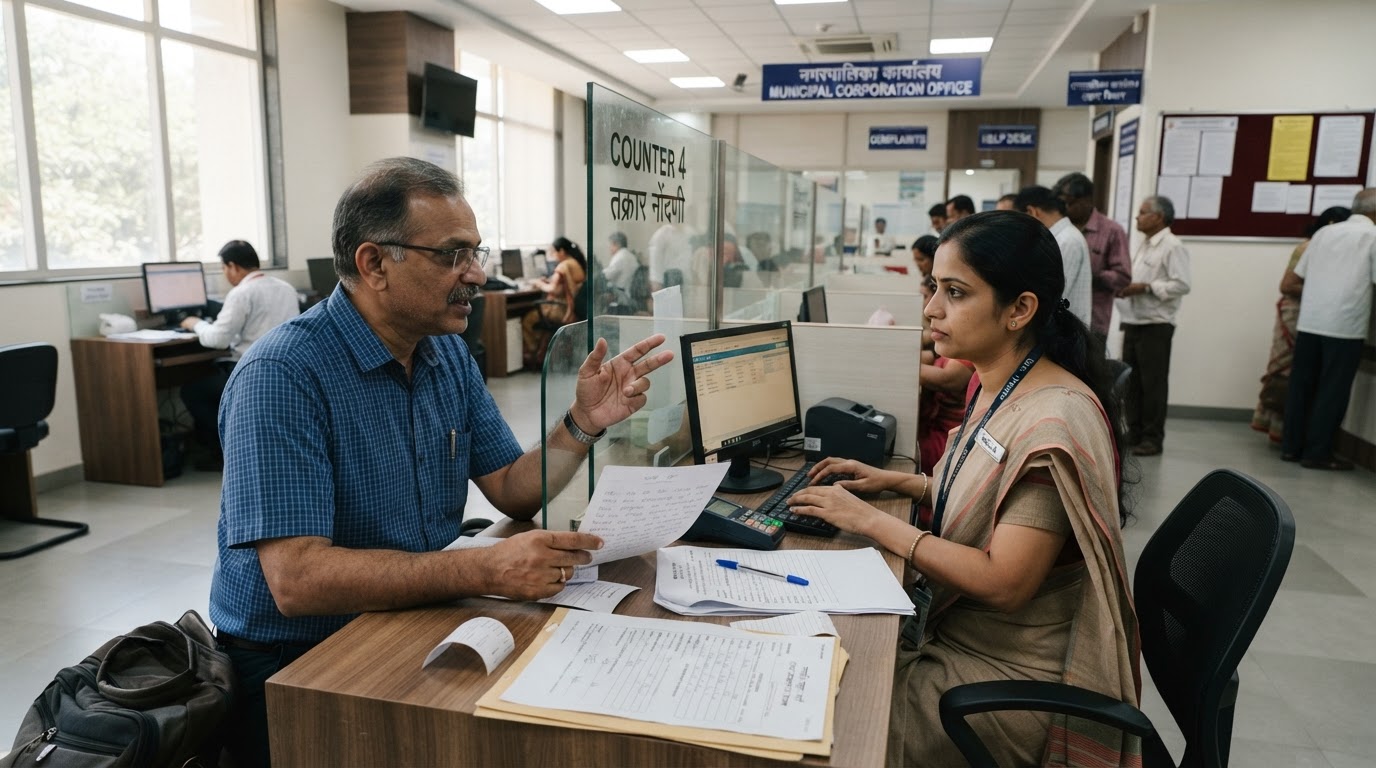
Living in a growing urban area means relying on several essential civic services every day. Roads need to be maintained, waste must be collected, water supply must function, drains must remain clear and public spaces must be safe. When one of these services fails, residents of Mira Road and Mira Bhayandar need to know where to report the problem, what information to provide and how to follow up. This guide explains a practical process for raising civic complaints with the Mira Bhayandar Municipal Corporation (MBMC).
Which civic problems can you report?
Civic complaints can cover a wide range of public-service problems, including:
- Garbage accumulation and missed waste collection.
- Blocked drains and sewage overflow.
- Water supply interruptions or suspected leakage.
- Potholes, damaged roads and broken footpaths.
- Fallen trees and dangerous branches.
- Streetlights that are not functioning.
- Unsafe public spaces and damaged municipal infrastructure.
- Waterlogging during heavy rainfall.
- Potentially dangerous buildings or structural conditions.
- Public-health and sanitation concerns.
The correct department depends on the issue. For example, MBMC maintains separate departmental information for water supply, public health, solid waste management and disaster management.
Step 1: Identify the exact location
Before contacting the municipal corporation, identify where the issue is happening. Write down the road name, nearby building, landmark, society name and neighbourhood. If possible, record the nearest junction or a recognisable public location.
A complaint saying “there is garbage near our building” is less useful than one identifying the road, nearby landmark and precise location of the garbage. Specificity helps the department act faster — always include the exact road, landmark and nearest junction.
If the problem covers a long stretch of road, describe the affected section and identify the worst points.
Step 2: Collect clear evidence
Take photographs or short videos when it is safe and lawful to do so. Useful evidence includes:
- A photograph showing the problem.
- A wider photograph identifying the location.
- The date and approximate time.
- A short description of the effect on residents.
- Any complaint reference number from an earlier report.
Avoid photographing private individuals unnecessarily. Do not enter dangerous areas, climb damaged structures or stand in traffic to collect evidence. For serious hazards, do not delay an emergency report while collecting photographs.
Step 3: Contact the relevant department
Start with the official MBMC website and look for the department responsible for your issue. The corporation's published departmental information includes the following contacts:
- Water supply: The MBMC Water Supply and Sewerage Department lists watersupply@mbmc.gov.in and an official contact number of 8422811470.
- Solid waste management: The MBMC Solid Waste Management Department lists swmhealth@mbmc.gov.in and a departmental contact number of 9892302735.
- Public health: The MBMC Public Health Department lists public.health@mbmc.gov.in and moh@mbmc.gov.in.
- Disaster management: The MBMC Disaster Management Department lists dm@mbmc.gov.in and a departmental contact number of 8422811370.
These are published departmental contacts, not a guarantee that every complaint will be resolved through a direct call. Check the current official directory before relying on a number.
Official directories: mbmc.gov.in/en/mbmc/contact-number, mbmc.gov.in/en/mbmc/water-supply, mbmc.gov.in/en/mbmc/solid-waste, mbmc.gov.in/en/mbmc/health, and mbmc.gov.in/en/mbmc/disaster-management.
Step 4: Write a clear complaint
A good complaint should explain what happened, where it happened, how long it has continued and what action is required. For example:
Subject: Request to remove accumulated garbage near [landmark]. Dear Sir/Madam, I would like to report the accumulation of garbage near [exact location] in Mira Road/Bhayandar. The waste has been accumulating since [date or approximate duration]. It is causing inconvenience to residents and may create sanitation concerns if it is not cleared. Please arrange an inspection and necessary cleaning. Photographs showing the location are attached. Kindly provide a complaint reference number, if available, so that I can follow up. Thank you.
Do not include sensitive personal information unless it is required by the official complaint channel.
Step 5: Keep a record of the complaint
Save the date, time, department contacted and any reference number supplied. If you receive an acknowledgement by SMS or email, retain it. If you submit the complaint through an official portal, save a screenshot of the submission confirmation.
A record helps when following up because you can refer to the original complaint rather than explaining the entire situation again.
Step 6: Follow up professionally
If the issue remains unresolved, contact the relevant department again and refer to the earlier complaint. State what has changed, whether the problem has become more serious and whether it is affecting additional residents.
For a problem affecting a housing society, a collective complaint from residents or the society management may help document the extent of the issue. However, a collective complaint does not guarantee a faster response. If the first department cannot help, ask which office is responsible. Keep the communication factual and avoid personal allegations without evidence.
When should you use emergency services instead?
Some issues require immediate assistance rather than an ordinary civic complaint. Examples include a building that appears to be at imminent risk of collapse, a fire, a live electrical hazard, a major gas leak or flooding that places people in immediate danger.
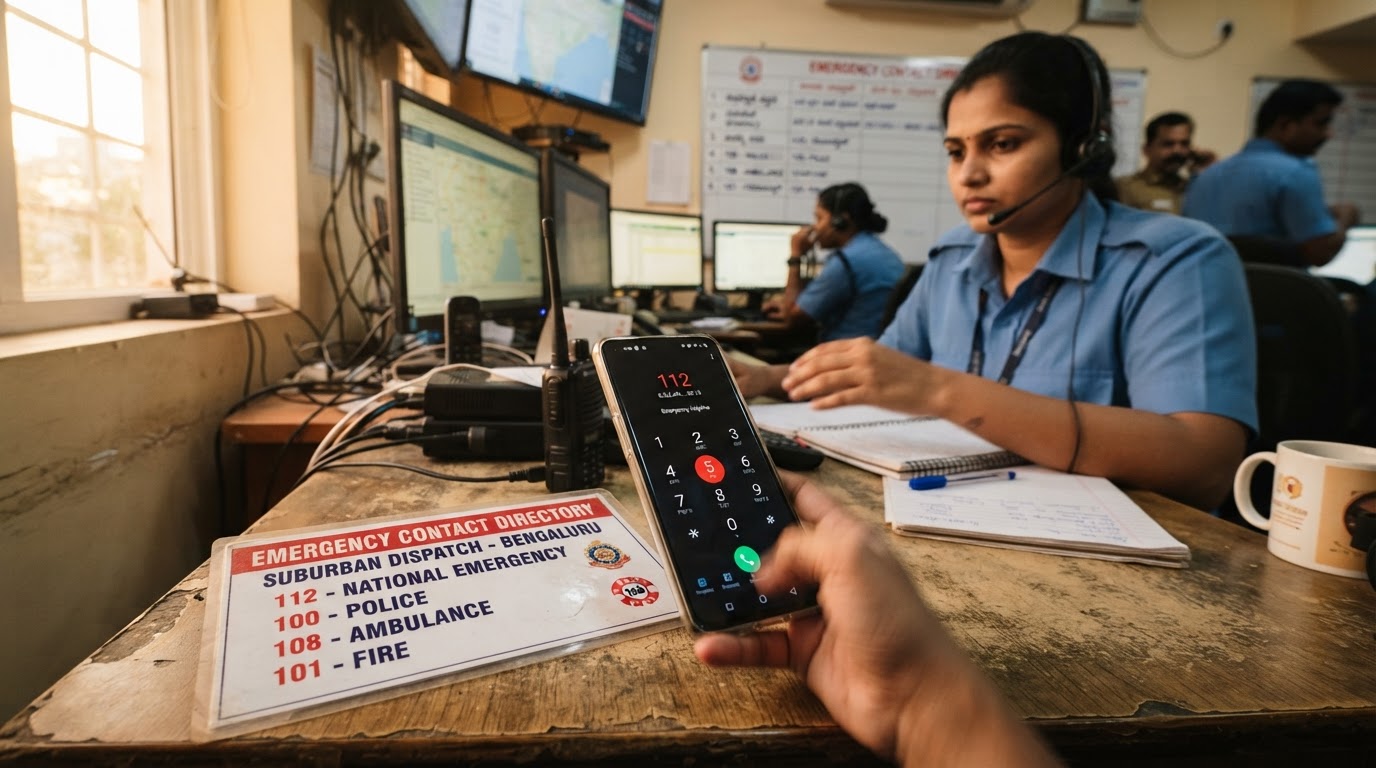
The MBMC Disaster Management Department publishes a disaster control room contact list, including 022-28197637, 022-28117102 and 022-28117104. For an immediate life-threatening emergency in India, call 112. Do not wait for a routine municipal response when lives may be at risk.
Conclusion
Residents can help improve local civic services by reporting problems clearly, documenting their location and following up through the correct department. Whether the concern involves garbage, water supply, drainage or damaged roads, a precise complaint gives the responsible authority more useful information to investigate.
Know a civic issue in Mira Road or Mira Bhayandar? Share the location and nature of the problem with MiraRoad.blog so the community can learn about local concerns and available reporting channels.
This article is an informational guide, not a guarantee of response times or complaint resolution.
Enjoying this story?
Get the best of Mira Road — local news, food finds and weekend plans — straight to your inbox.
Team Mira Road Blog
The editorial team behind MiraRoad.blog — covering local news, food, events and everything Mira Road & Mira Bhayandar, one story at a time.
Frequently asked questions
Identify the responsible department through the official MBMC website, provide the exact location and describe the issue clearly. Keep the acknowledgement or complaint reference number.
Yes. You can report public infrastructure and municipal-service problems affecting the surrounding area. For private building maintenance, contact the society management or the responsible property owner as appropriate.
Start with MBMC's official contact directory and ask which department handles the issue. Avoid sending sensitive information to unofficial social media accounts claiming to represent the corporation.
You may choose to share a factual public update, but do not rely on social media alone. Use an official complaint channel when one is available and keep the acknowledgement.
Made for Mira Road. Built for the community.
Your neighbourhood, one story at a time.