Mira Road Water Supply Complaints: How to Report Problems
Facing low water pressure, a water cut or a suspected leak in Mira Road? Learn how to document the issue and contact MBMC's Water Supply Department.
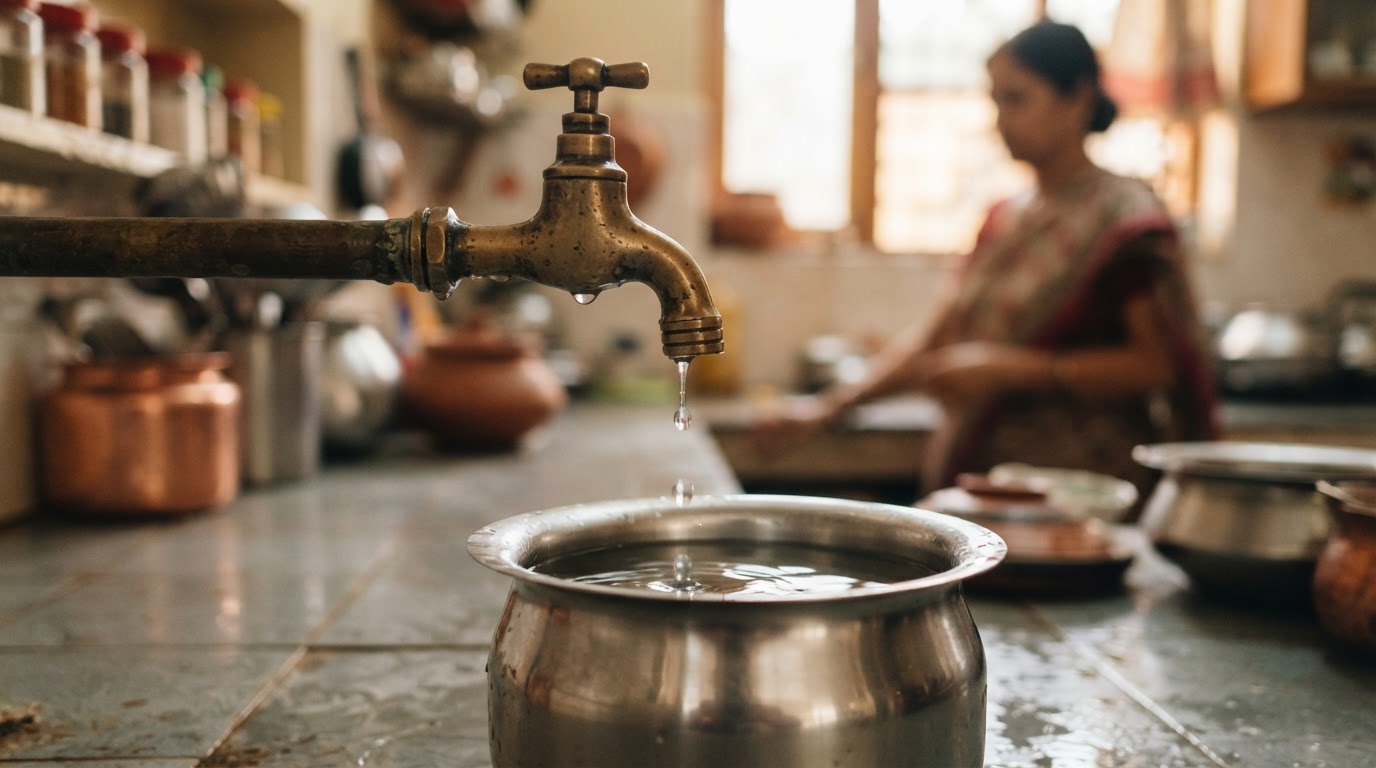
Reliable water supply is essential for households, housing societies, shops and businesses. When the water supply stops, pressure drops or a pipe leaks, residents need accurate information about the responsible department and the correct way to report the problem. For residents of Mira Road and Mira Bhayandar, the Mira Bhayandar Municipal Corporation (MBMC) publishes information about its Water Supply and Sewerage Department. This guide explains how to document water-related problems, contact the department and follow up without relying on unverified messages.
Common water supply problems
Residents may experience several types of water-related issues:
- A complete interruption in supply.
- Low water pressure.
- Water arriving later than expected.
- A suspected pipe leak.
- Water accumulating around a pipeline or road.
- Discoloured water or an unusual smell.
- A possible problem affecting multiple buildings.
- Sewage or drainage concerns that may affect public health.
Not every interruption has the same cause. A problem inside one building may involve its storage tanks, pumps or internal plumbing, while an issue affecting several streets may require investigation by the relevant utility or municipal authority. Avoid assuming that every interruption is a municipal failure before the cause is established.
Who should you contact?
The official MBMC Water Supply and Sewerage Department page lists the following contacts:
- Email: watersupply@mbmc.gov.in
- Departmental contact: 8422811470
- Office contact: extension 234, as listed by MBMC.
Check the current official directory before publication or calling because contact details can change. The official source is mbmc.gov.in/en/mbmc/water-supply.
How to report a water supply problem
1. Check whether the problem is local or widespread
Ask your building manager or neighbouring residents whether they are experiencing the same problem. If only one flat is affected, the issue could involve an internal tap, valve, pump or building storage system. If multiple buildings in the area report the same interruption, it may indicate a broader supply problem.
This comparison is useful evidence, but it does not establish the cause. It simply helps you describe the scope of the problem more accurately when you report it.
2. Record the location and timing
Write down the exact building, street, society and nearest landmark. Record when the interruption began and whether the supply has returned. For low pressure, describe whether it affects all taps or only particular floors or parts of the building.
3. Ask your society management to check internal systems
Housing societies may have overhead tanks, underground storage tanks, pumps and internal pipelines. Ask authorised maintenance staff to check these systems safely.
Do not open municipal valves or enter utility chambers yourself. Leave infrastructure checks to authorised maintenance staff or municipal personnel.
4. Submit a clear complaint
Include the location, start time, type of problem and the number of households affected if known. A precise complaint gives the responsible authority more useful information to investigate.
If the water looks contaminated, avoid drinking it until the issue has been assessed. Use a safe alternative water source and seek official health guidance.
5. Keep the reference number
If a complaint acknowledgement is provided, save it. Record the department contacted and the date of the report. When following up, refer to the original complaint and explain whether the problem has changed.
What should residents do during a water interruption?
Plan household water use carefully. Prioritise drinking, cooking, hygiene and essential cleaning. Store drinking water in clean, covered containers. Do not use containers previously holding chemicals or cleaning products.
Avoid wasting stored water on non-essential tasks while the interruption continues. If you use a water tanker, check the provider's reliability and ask about the water source and suitability for drinking.
A water tanker arranged privately by a society is not necessarily an official municipal supply vehicle. Verify arrangements through the society or relevant authority.
What if the water appears dirty or smells unusual?
Do not assume that boiling alone will make every possible contaminant harmless. Stop using suspicious water for drinking and food preparation until you obtain appropriate guidance. Report the colour, smell, timing and location to the relevant authority.
If several households are affected, ask the society management to document the issue and report it promptly.
Conclusion
Water supply complaints are easier to investigate when residents provide an exact location, clear timing and a precise description of the issue. Use the official MBMC Water Supply and Sewerage Department directory, keep complaint records and avoid spreading unverified claims about the cause or duration of an interruption.
MiraRoad.blog updates this article whenever the municipal corporation publishes a revised contact or official water supply notice. Sources: MBMC Water Supply Department and the MBMC Contact Directory.
Enjoying this story?
Get the best of Mira Road — local news, food finds and weekend plans — straight to your inbox.
Team Mira Road Blog
The editorial team behind MiraRoad.blog — covering local news, food, events and everything Mira Road & Mira Bhayandar, one story at a time.
Frequently asked questions
Visit mbmc.gov.in/en/mbmc/water-supply. The page lists the email watersupply@mbmc.gov.in and the departmental contact number 8422811470. Check the current official directory before calling, as contact details can change.
Ask authorised building maintenance staff to check internal tanks, pumps and valves before assuming the municipal network is responsible. If only one flat is affected, the issue could involve an internal tap, valve, pump or building storage system.
Not without checking the source and date. Look for an official notice or confirmation from the relevant department before assuming an interruption is a municipal failure.
Stop using suspicious water for drinking and food preparation until you obtain appropriate guidance. Report the colour, smell, timing and location to the relevant authority. Do not assume that boiling alone will make every possible contaminant harmless.
Save the complaint acknowledgement or reference number, then contact the department again and refer to the original complaint. State what has changed, whether the problem has become more serious and whether it is affecting additional residents.
Made for Mira Road. Built for the community.
Your neighbourhood, one story at a time.