MBMC's ₹188.60 Crore Sewage Treatment Plant Proposal Explained
Nine sewage treatment plants in Mira Bhayandar are the subject of a reported ₹188.60 crore renovation proposal. Understand the project and what residents should ask.
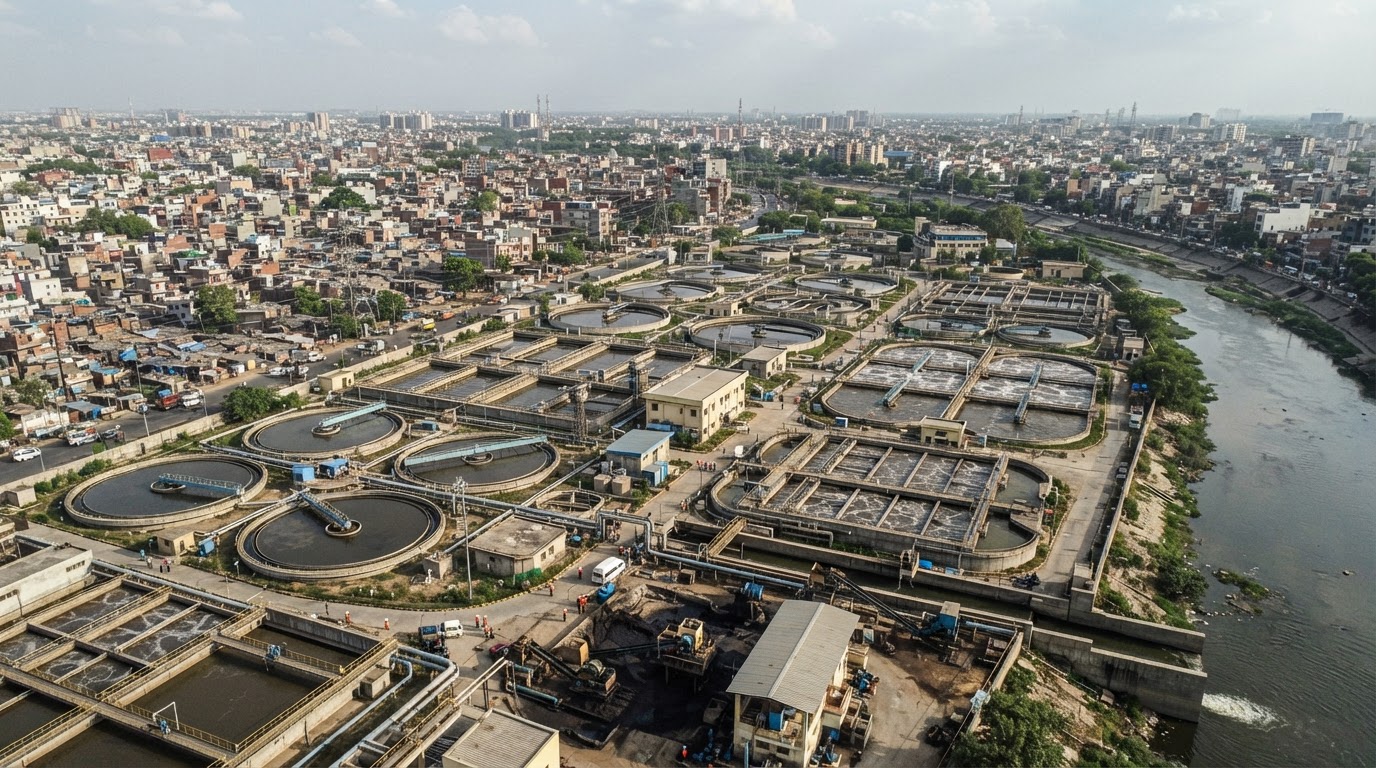
Wastewater treatment is essential to public health, environmental protection and the long-term management of a growing urban area. A recent report has raised questions about the performance of sewage treatment infrastructure in Mira Bhayandar and the proposed cost of bringing several facilities back to the required standard.
According to Loksatta's report published on 15 October 2026, MBMC has prepared a proposal worth ₹188.60 crore to renovate nine sewage treatment plants.
What is being proposed?
The report says that the nine facilities were constructed approximately seven to ten years ago using moving bed biofilm reactor (MBBR) technology.
Concerns have reportedly been raised about their operating capacity and wastewater-treatment performance. The proposed renovation would address structural condition, machinery repairs, electrical systems and monitoring controls.
The reported amount is a proposed expenditure, not proof that the renovation has been fully approved, funded or completed.
Why does wastewater treatment matter?
Sewage treatment removes contaminants from wastewater before it is discharged or reused under the applicable conditions.
When treatment facilities fail to operate as intended, the consequences can include environmental pollution, odour complaints and risks to water quality. Actual impacts depend on the condition of the facilities, the wastewater involved and how it is handled.
Residents should avoid assuming that every treatment plant has failed equally. Plant-specific performance records are needed to establish the extent of the problem.
What does MBMC's official information say?
MBMC's website also describes an underground drainage project under AMRUT 2.0. The published brief identifies administrative approval of ₹66.81 crore for Phase 2, Part 2, including a 6.5-million-litre-per-day sewage treatment plant and approximately 10 kilometres of sewer pipelines.
This is a separate project description and should not be confused with the reported ₹188.60 crore renovation proposal. The two documents concern different scopes of work.
What should residents ask?
The key questions are straightforward:
- What are the operating results for each of the nine plants?
- Which equipment or structures require repair?
- How much has already been spent on the original facilities?
- What technical evaluation supports the proposed renovation cost?
- Has the proposal received the required technical and administrative approvals?
- How will treatment quality and capacity be measured after the work?
Publishing these answers would allow residents to understand both the need for renovation and the proposed cost.
How should the project be monitored?
Residents can follow official meeting agendas, tender notices, work orders and subsequent project updates.
The final outcome should be assessed against measurable criteria: plant availability, treatment performance, operating capacity and compliance with relevant standards.
Frequently asked questions
The cited report describes a renovation proposal. Do not treat it as completed expenditure.
The report identifies nine sewage treatment plants.
No. MBMC's AMRUT 2.0 page describes a separate project with a different scope and published cost.
Conclusion
The proposed renovation raises an important question about infrastructure maintenance: how can the city ensure that existing public assets deliver the performance expected of them?
The answer requires transparent technical assessments, clear financial records and measurable results after the work.
Verified & Curated
Researched from official, named sources
Loksatta report, 15 October 2026 · MBMC official underground drainage project information.
Enjoying this story?
Get the best of Mira Road — local news, food finds and weekend plans — straight to your inbox.
Team Mira Road Blog
The editorial team behind MiraRoad.blog — covering local news, food, events and everything Mira Road & Mira Bhayandar, one story at a time.
Frequently asked questions
The cited report describes a renovation proposal. Do not treat it as completed expenditure.
The report identifies nine sewage treatment plants.
No. MBMC's AMRUT 2.0 page describes a separate project with a different scope and published cost.
Made for Mira Road. Built for the community.
Your neighbourhood, one story at a time.
Connected stories
Guides that build on what you just read.