How to Verify Local News in Mira Road Before Sharing
Learn how to check local news, municipal notices, crime reports, transport updates and viral WhatsApp messages before sharing them.
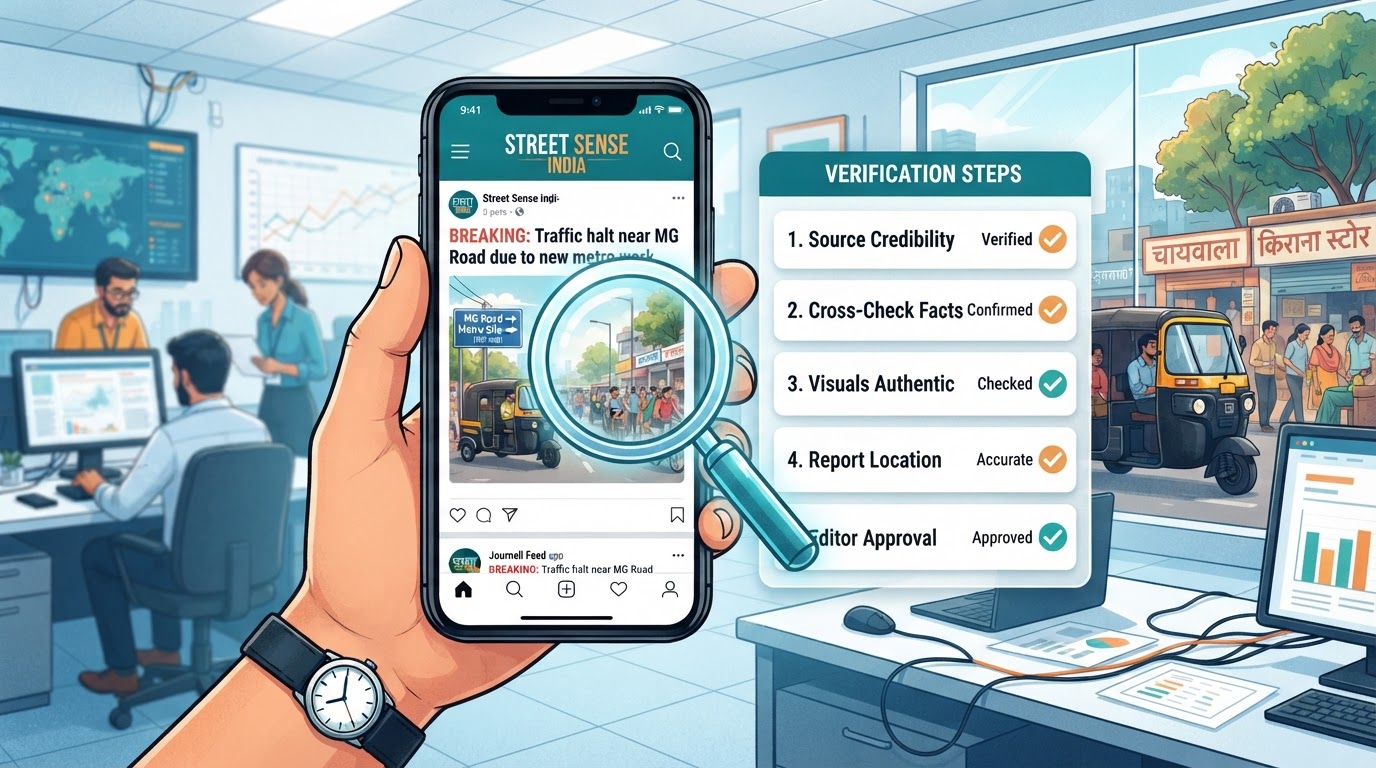
A message about a water cut, road closure, crime incident or new transport service can spread through a neighbourhood in minutes. Sometimes the information is accurate. Sometimes it is outdated, incomplete or misleading. A genuine announcement may also be shared with an incorrect date or a photograph from another location. For residents of Mira Road and Mira Bhayandar, knowing how to check local information is an important part of staying informed. This guide explains a practical process for verifying neighbourhood news before forwarding it or publishing it online.
Why local information needs verification
Local news can influence real decisions. Residents may change their travel plans, buy additional supplies, avoid an area or contact public authorities because of a message they receive. Incorrect information can create unnecessary anxiety, waste time or direct people to the wrong service.
The problem is not limited to fabricated stories. An authentic notice can become misleading when its original date, location or conditions are removed. The solution is to check the original source and understand exactly what it says.
The problem is not limited to fabricated stories. An authentic notice can become misleading when its original date, location or conditions are removed. Always check the original source and understand exactly what it says.
Step 1: Find the original source
If a message claims that the municipal corporation has announced a water interruption, search for the announcement on the official MBMC website. For transport news, check the relevant railway authority or transport agency. For police-related updates, look for an official police communication or reliable reporting that identifies its source.
Useful starting points include:
- MBMC: mbmc.gov.in
- Thane district government: thane.nic.in
- MMRDA: mmrda.maharashtra.gov.in
- RailMadad: railmadad.indianrailways.gov.in/madad/final/home.jsp
An official website is generally a stronger starting point than an unattributed screenshot. However, make sure the page actually supports the claim being made.
Step 2: Check the date
Always look for the publication date and the period covered by the announcement. A road closure notice from last month does not establish that the road is closed today. A rainfall warning for a previous date should not be presented as a current forecast.
If a message contains no date, search for the original announcement before sharing it. For ongoing stories, check whether a newer update has replaced the earlier information.
Step 3: Confirm the location
A photograph showing a flooded road or damaged building may be real but unrelated to Mira Road. Look for identifiable landmarks and compare them with the location stated in the report. Check whether the source names the road, neighbourhood or relevant facility.
If the location cannot be confirmed, describe it as unverified rather than claiming it happened in Mira Bhayandar. Do not rely on a photograph alone to establish where or when an event occurred.
Step 4: Separate facts from claims
Consider this example:
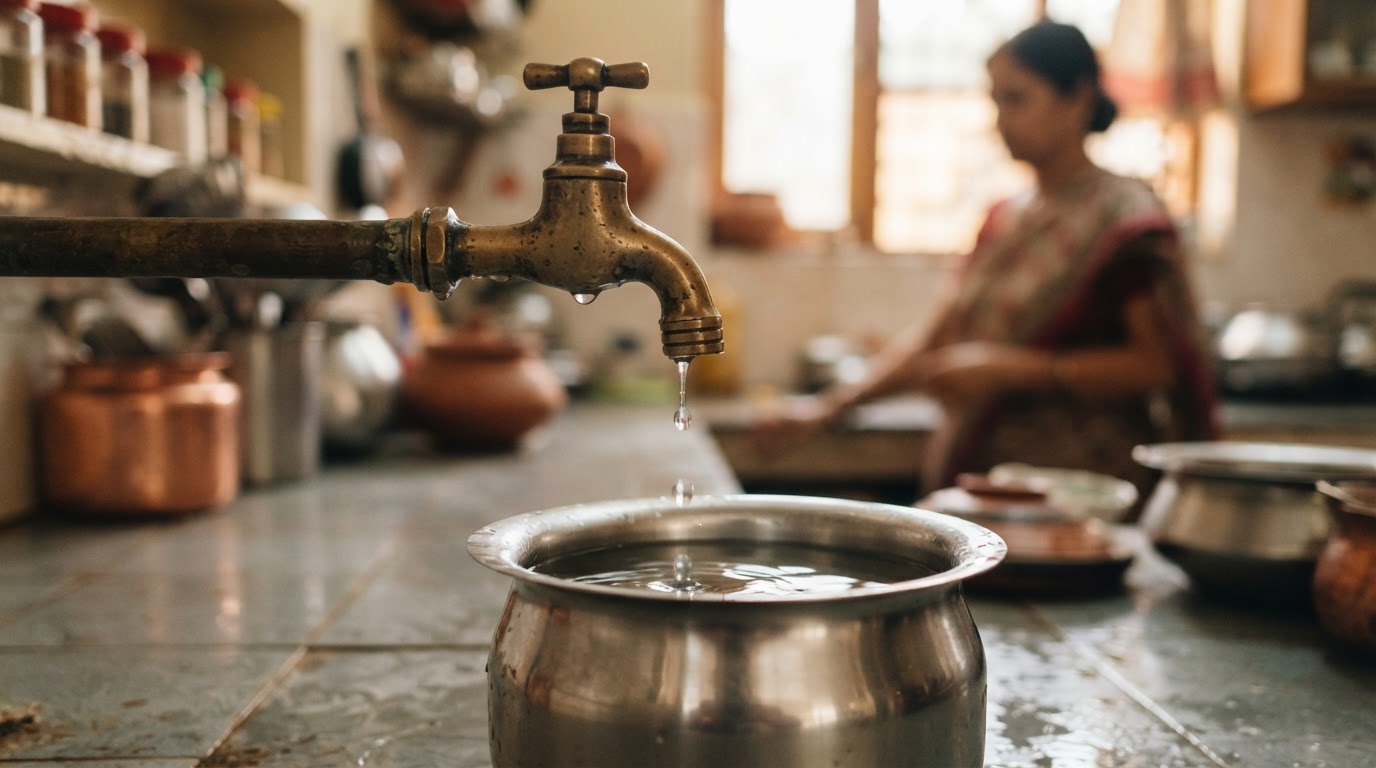
Residents have reported low water pressure in two buildings.
This is a limited claim about reports from residents.
MBMC has announced a citywide water cut for three days.
This is a much broader claim that requires a relevant official announcement or strong independent confirmation. The second statement should not be inferred from the first.
A responsible report distinguishes direct observations, statements from authorities, resident allegations and information that remains uncertain. Do not infer a broad official announcement from a limited resident report.
Step 5: Check viral WhatsApp messages
When you receive a forwarded message, ask:
- Does it identify the original source?
- Is the publication date visible?
- Does the link lead to a credible source?
- Is the location specific?
- Does the announcement still apply?
- Are other reliable sources reporting the same material event?
- Does the message pressure readers to forward it urgently without evidence?
Urgent wording does not make a message true. If the source cannot be verified, do not forward it as established fact.
Step 6: Be especially careful with crime reports
Crime-related posts can harm people when allegations are published as facts. Do not share names, photographs or accusations about alleged suspects simply because a message appears in a neighbourhood group.
Look for reliable reporting or an appropriate official statement. Distinguish an allegation, an arrest, a charge and a conviction. Avoid publishing personal information about victims, children or other vulnerable individuals unless there is a clear, lawful and justified basis.
Step 7: Verify transport and infrastructure announcements
Transport projects and public works often involve multiple stages. An announcement about construction does not necessarily mean a service has opened. A trial run is not proof of regular passenger operations. A proposed completion date may change.
When reporting a project, identify the authority, date, project section and stated milestone. For current operational details, seek the latest official announcement rather than relying on an old article.
Step 8: Correct mistakes transparently
Even a careful publisher can make mistakes. If a story contains an incorrect date, number or location, correct it promptly and explain the material change when appropriate. Do not silently leave an important false claim circulating through social media after correcting only the website.
For contact directories, maintain a last-verified date and remove or flag numbers that cannot be confirmed.
A simple verification checklist for MiraRoad.blog
Before publishing a local story, an editor should confirm:
- The main claim is clearly stated.
- The location is relevant to Mira Road or Mira Bhayandar.
- The date and time period are clear.
- The source is credible and linked.
- The article distinguishes confirmed facts from allegations.
- Telephone numbers and service details have been checked.
- Images are relevant to the actual event.
- Personal information is handled responsibly.
- Any urgent safety guidance is appropriate and reliable.
- A correction process exists if new evidence emerges.
Conclusion
A trustworthy local publication does more than repeat messages circulating in the community. It verifies dates, locations, sources and the exact meaning of each announcement. MiraRoad.blog builds credibility by linking to original documents, correcting errors transparently and refusing to turn rumours into headlines. The most useful local news is not necessarily the fastest post. It is information residents can understand, verify and act on responsibly.
Verified & Curated
Researched from official, named sources
MBMC official website, Thane District Government, MMRDA, and RailMadad.
Enjoying this story?
Get the best of Mira Road — local news, food finds and weekend plans — straight to your inbox.
Team Mira Road Blog
The editorial team behind MiraRoad.blog — covering local news, food, events and everything Mira Road & Mira Bhayandar, one story at a time.
Frequently asked questions
Find the original source, check the date and location, and compare the claim with reliable official information or credible reporting. Multiple forwards do not establish authenticity — always trace the message back to its origin before treating it as fact.
Not automatically. Multiple forwards do not establish authenticity. If the source cannot be verified, do not forward it as established fact, no matter how urgent the wording sounds.
Yes, as a reporting practice, but claims should be checked proportionately to their seriousness. Clearly label unverified information and avoid publishing harmful allegations without adequate evidence.
Identify the authority, date, project section and stated milestone. Construction does not mean a service has opened, a trial run is not proof of regular operations, and a proposed completion date may change. Seek the latest official announcement.
Correct it promptly and explain the material change. Do not silently leave a false claim circulating through social media after correcting only the website. Transparent corrections build credibility.
Made for Mira Road. Built for the community.
Your neighbourhood, one story at a time.